

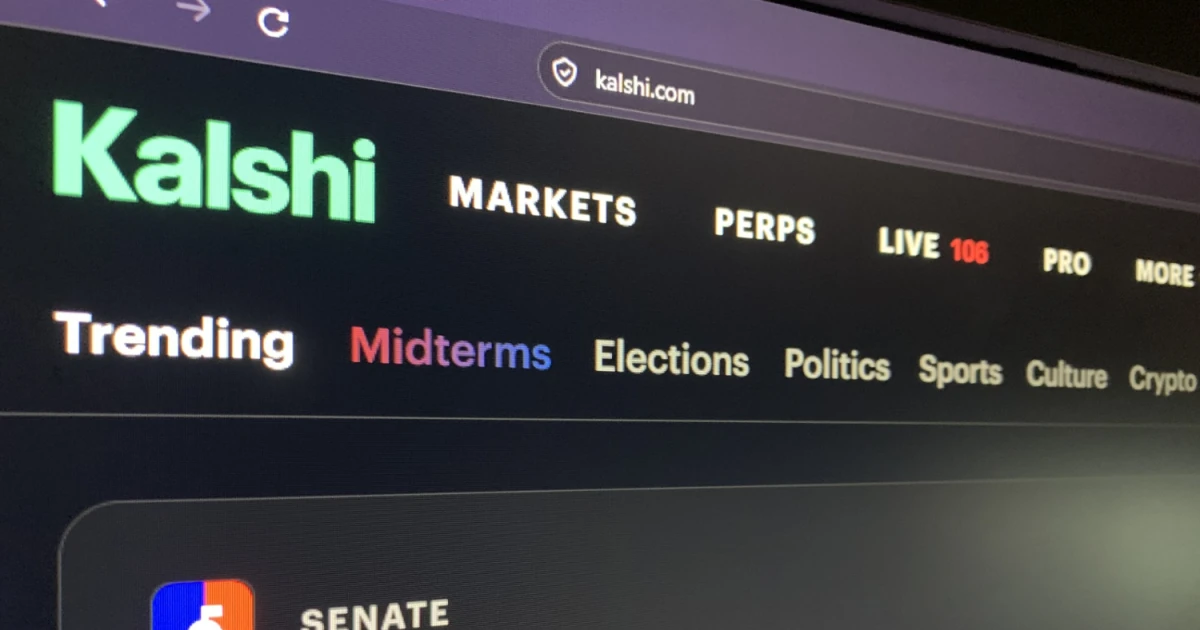
Utah Attorney General Derek Brown has filed a major civil complaint against Kalshi and its associated entities, including Susquehanna International Group. The suit alleges a brazen pattern of unlawful gambling operations that violate Utah's constitutional ban on the activity. This action is not a simple regulatory fine; it’s a direct challenge to the foundational legality of prediction markets, seeking to halt contracts covering sports, elections, and culture for all Utah users.
The state estimates that Kalshi collected between $30.6 million and $61.2 million in fees from Utah accounts alone through October 19, 2026. Beyond the fees, the complaint cites over $5.5 million in individual user losses, framing the issue not just as a violation of law but as a public nuisance causing demonstrable harm to residents.
Targeting the Ecosystem, Not Just the Platform
What makes this lawsuit a significant turning point is its scope. While many previous state actions focused solely on the prediction market platform, this filing explicitly names the market makers and liquidity providers, such as Susquehanna entities. This shifts the focus from the website itself to the entire financial ecosystem that sustains the volume and pricing of these contracts.
This move is highly strategic. The state is essentially targeting the financial plumbing of the market, making it harder for Kalshi to operate in the region. The suit seeks preliminary and permanent injunctions, along with restitution and disgorgement of profits, forcing a comprehensive overhaul of how the platform interacts with Utah residents.
The timing of this lawsuit is critical. It follows a key August 2026 federal district court ruling where Utah successfully argued that federal commodities law did not preempt the state's ability to enforce its anti-gambling statutes on Kalshi's sports contracts. This state victory gave the AG the legal footing to escalate the fight.
The Friction Point: Is It Gambling Rebranded?
While the legal documents outline the financial claims, the real friction point lies in the definition of the product itself. Discussions I've observed across community forums show a deep skepticism about Kalshi's claim that its contracts are not gambling. Users consistently question whether these prediction markets are merely gambling rebranded as swaps or futures, noting that the user experience feels indistinguishable from traditional sportsbooks.
The enforcement mechanisms proposed by Utah also raise practical questions. The suit calls for court-approved third-party geolocation enforcement. While this sounds definitive, my digging into related discussions shows immediate skepticism regarding its practicality. Can geolocation tools truly stop determined users, especially those using mobile devices, or will they simply create a costly, imperfect barrier?
Furthermore, the lawsuit’s broad scope extends far beyond sports. By targeting contracts related to elections, politics, and culture, Utah is challenging the core utility of the platform. This suggests the AG isn't just trying to shut down betting; they're trying to restrict the entire market's operational model within the state.
Kalshi, in its response, maintains that its contracts are regulated under the CFTC and that no single state should be allowed to veto a national market. This sets up a complex, ongoing legal tug-of-war between state sovereignty and federal regulatory authority. The legal battle now pivots on whether a state's public health and constitutional concerns outweigh the platform's national regulatory claims.
This case is a defining moment for the future of digital finance. It forces a reckoning on how regulators, both state and federal, will define and manage markets that exist in the gray area between financial hedging and pure speculation. I believe the ultimate outcome will set a powerful precedent for how other states approach the rapidly evolving world of prediction markets, especially as we see similar regulatory actions in places like Ohio and Florida.